
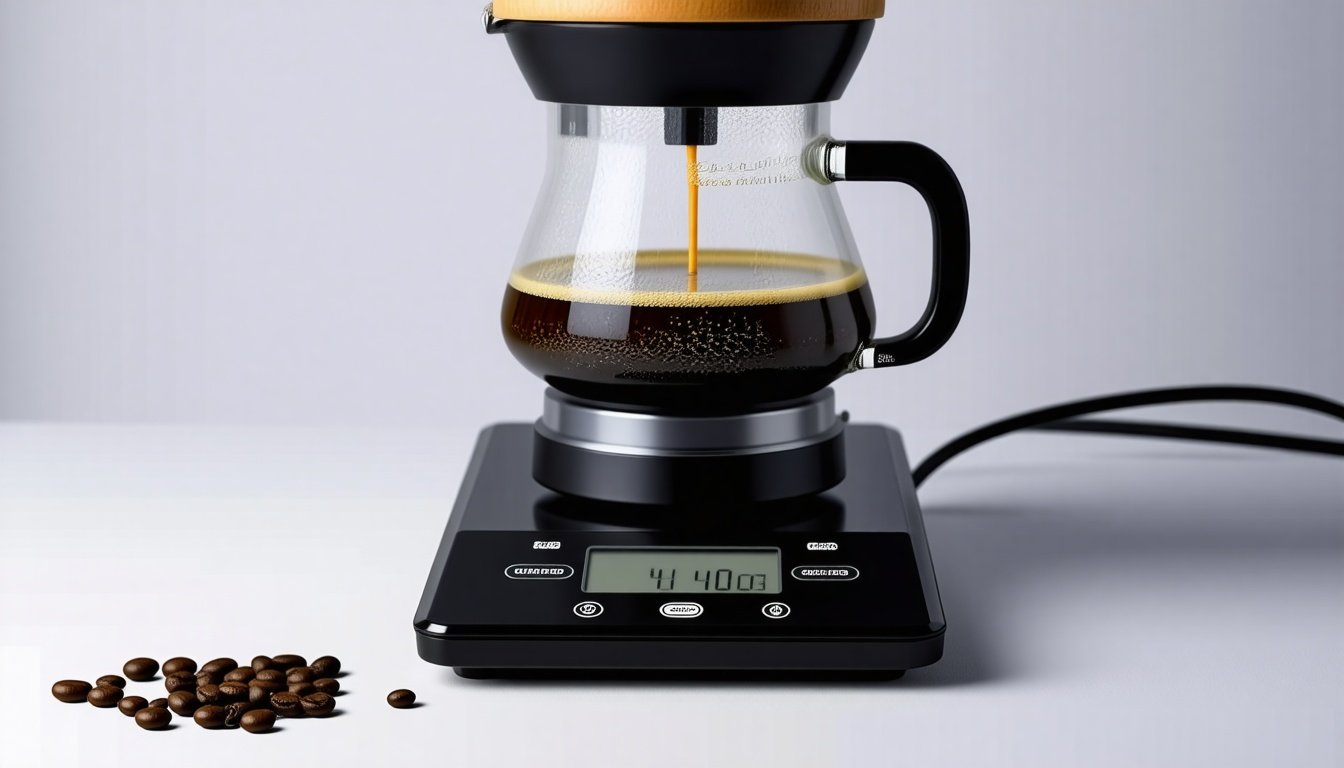
I never thought a little kitchen scale and a simple timer could change my entire coffee game. But here we are. If you have ever brewed coffee and wondered why that cup from your favorite coffee shop tastes a million times better, I get it. I have been there, staring into my mug thinking, “Did I mess this up again?” Spoiler: you probably did not mess it up, but your tools might need a little upgrade in respect and attention.
Home roasting coffee is already a bit like magic, turning green beans into this beautiful, crackling batch of roasted goodness. But brewing? Brewing is where the magic gets real. It is where you get to control the dance between water, heat, and grounds that decides if you wake up to a cup of liquid gold or something closer to sad dishwater.
Here is the deal: a scale and a timer are not just fancy toys. They are your new best friends, your secret weapon, your little helpers that turn guesswork into science, and science into deliciousness. If you want to know how I use these two humble tools to make every brew perfect, stick around. This is the kind of coffee talk that feels like chatting with a friend over a cup of warm, freshly roasted coffee.
Why the Scale Is Your Coffee’s Best Friend
You might think, “A scale? For coffee? Isn’t eyeballing enough?” I used to think that too. Spoiler alert: eyeballing is fun but wildly inconsistent, like trying to hit a moving target with a blindfold on.
When roasting your own beans, the scale helps before the water hits the grounds. I measure the exact weight of coffee beans — down to the gram — so every batch starts with the right amount. That matters because different roasts and beans have different densities. Some beans puff up more when roasted, some stay dense like little rocks. So, the weight tells me how much caffeine and flavor potential I am working with.
Once the beans are roasted and cooled, out comes the scale again for brewing. Why? Because water-to-coffee ratio is everything. Usually, I use about 1 gram of coffee for every 16 grams of water. That ratio is my sweet spot for my taste buds.
When coffee is too strong, it feels like a punch in the face. Too weak, and it is just sad brown water. The scale saves me from this emotional rollercoaster by making sure I do not add too much or too little coffee.
How I Do It
- Measure your roasted coffee beans on the scale. I usually go with 20 grams for a single cup.
- Heat water to the right temperature (around 200°F / 93°C for me).
- Weigh the water as you pour it in, aiming for about 320 grams of water.
- Put the scale on the brewing device (pour-over, French press, Aeropress — whatever you use).
- Start the timer the moment you begin pouring, and keep an eye on the scale to pour at the right speed.
The Timer: Turning Coffee Into a Ritual
Now, let us talk about the timer. Without it, brewing coffee feels like guessing when your toast will pop out, but here, timing is way more important than a slightly burnt piece of bread.
Every coffee bean acts like a little time traveler. The moment water hits the grounds, the clock starts ticking. Hot water extracts oils, acids, and flavors, but too little or too much time will ruin the whole party.
If you leave coffee steeping too long, you end up with bitterness and astringency. Not enough time, and you will sip something sour and thin. The timer is the referee making sure every second is fair play.
My Brews and Their Timers
- Pour-over: About 3 to 4 minutes total. I pour water in stages, watching the timer to pour steadily and pause between pours.
- French press: Usually 4 minutes steeping after pouring all the water.
- Aeropress: Sometimes just 1 to 2 minutes depending on the recipe.
Seeing the numbers helps me focus instead of guessing or getting distracted. It creates a rhythm that is almost meditative. I find the timer turns brewing into a small ceremony, a moment just for me before the chaos of the day kicks in.
Pairing Scale and Timer: The Dynamic Duo
Using a scale without a timer can feel like throwing flour into the wind—you might get some on your cake, maybe not. Using a timer without a scale is like baking cookies without measuring sugar. Good luck!
Together, the scale and timer help me repeat the exact same brew day after day. What does that mean in real life? It means waking up to coffee that tastes exactly right. No bitter surprises, no weak disappointments, just that warm hug in a mug.
When I roast at home, I get to experiment and then lock in the perfect brew ratio and timing. Maybe I roast a batch with a little stronger caramel notes, so I adjust the brew time slightly to bring out the sweetness. Or a batch is a bit light, so I tweak the coffee weight a little higher for more strength.
I have a small notebook where I record these “experiments” with bean weight, water weight, temperature, and time. When I get it just right, I feel like a coffee wizard.
My Foolproof Steps
- Weigh beans before grinding.
- Grind coffee right before brewing.
- Set scale with brewing device and zero it out.
- Start timer and pour water slowly while watching scale numbers.
- Stop pouring at desired water weight.
- Let coffee brew for the full timer duration.
- Enjoy your perfect cup!
Why Guess When You Can Know?
Coffee is an art, but it is also science. And science loves numbers. When I first started roasting and brewing, I treated it like cooking without a recipe—tasting, guessing, fiddling around. Sometimes I ended up with amazing coffee. Other times, I looked at my mug and wondered what just happened.
Getting a scale and timer changed the game for me. It removed the mystery. It made brewing predictable, so I felt less anxious and more excited about trying new beans and roasts. I began to respect the small details that make a big difference. That tiny bit of extra water or 30 seconds more steeping time could flip the whole flavor.
You do not need fancy coffee gear to start, but a scale and a timer are worth every penny. You can get basic ones that do the job well and will last forever. For me, that small investment unlocked a world of flavor and joy.
Some Real Talk: It Is Okay to Mess Up
Look, I am not perfect at this coffee thing. I am human. There are mornings when I forget to start the timer, or I pour too fast and flood the grounds. There are roasts where I guessed the wrong water temperature and ended up with a funky cup.
The difference is I learned fast that mistakes teach you a lot. When you have your scale and timer handy, you can go back and see what you did differently. It is like having a logbook for your coffee adventures. No more blaming the beans or the roaster—just a little nudge to try again and tweak.
The joy of home roasting and brewing is that you are in charge. You get to create your own ritual, your unique flavor story. Sometimes the process is messy, but with a scale and timer, it becomes a bit less messy and a lot more fun.
Getting Started: What I Recommend
- Buy a digital kitchen scale that can measure in grams and has a tare function (which resets the weight to zero when you place your coffee device on it).
- Get a simple timer, or just use your phone’s timer with a stand nearby so your hands are free.
- Experiment with ratios. Start with 1:16 coffee-to-water and adjust based on taste.
- Note your results. Keep a little journal or app to jot down beans, roast dates, weight, brew time, water temp, and your thoughts.
- Learn from your mistakes and celebrate your wins. Every cup is a new chance.
One Last Thing: The Coffee Moment
What makes coffee special is not just the caffeine kick or the flavors dancing on your tongue. It is that quiet moment you take for yourself—hand on the warm mug, steam curling up, the scent filling the air, a little pause in a busy world.
Using a scale and timer does not just perfect your coffee. It gives that moment ritual some shape, some magic that you control. It is like telling the coffee, “Hey, I see you. I respect what you can do.” And somehow, the coffee gives back, richer and better with every brew.
If you have not tried this yet, try it tomorrow morning. Grab your scale and timer, and pay close attention. Watch how those tiny details make the biggest difference. Your roasted beans will thank you, and so will your taste buds.